Twenty years after the execution of deposed President Saddam Hussein, who was ousted by the United States in 2003, former American investigator George Piro, who spent six months with him after his arrest, reveals the secrets of the deposed president and the contradictions of the man and his multiple moods.
In an article published by the New York Times, former FBI investigator George Piro recounts his experience as the lead interrogator with Saddam Hussein for six months after his arrest.
Piro conducted translations during Saddam's daily medical examinations and spent most mornings with him in lengthy conversations in Arabic, whether while sipping coffee or during exercise sessions. He said, "I spent more time with Saddam Hussein than any other American, to the point that he once told me: You know me better than my two sons do."
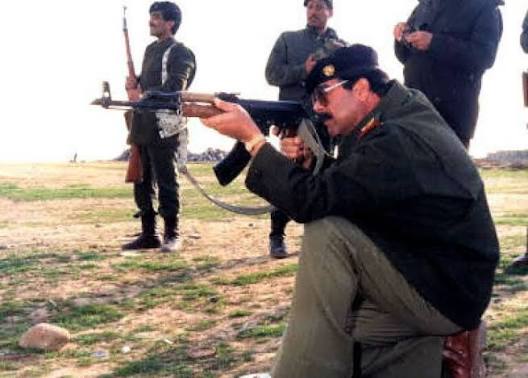
Piro describes Saddam as a tyrannical and violent ruler, a personality driven by narcissism and psychological delusions; he was, according to Piro's description, more like a mafia leader with tanks and missiles, running a corrupt and brutal regime, knowing how to maneuver and exploit the weaknesses of others.
Piro states that Saddam clearly became angry when someone compared him to 20th-century leaders, such as Nasser, Stalin, or Hitler, because he saw himself as a different leader who derived his legitimacy from strength and Iraqi identity, not from emulating other political models.
He also points out that American analysts failed to understand his cultural and social motivations, as well as his strong desire for education and culture. He remained illiterate until the age of ten and later began writing novels and poems in a desire to appear as a well-rounded intellectual. His opulent palaces reflected a showy tendency.
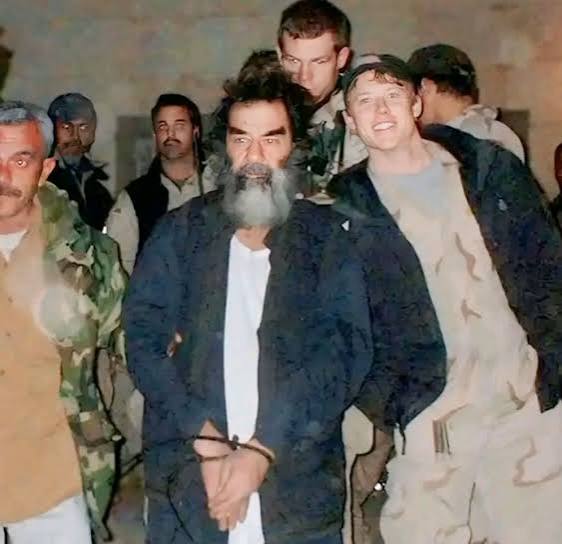
Piro reminds us that the United States established close relations with Saddam's regime during the 1970s and 1980s, providing him with intelligence and military information that helped him in his war against Iran throughout the eight years of the war. In 1984, after Iraq used chemical weapons in that war, the Iranian army and unarmed civilians were outraged, as well as against the Kurdish population in the north and the marshes during periods from 1986 to 1989. Donald Rumsfeld, who was a special American envoy to the Middle East, conveyed a message to Saddam confirming Washington's desire to improve bilateral relations at a pace chosen by Iraq.
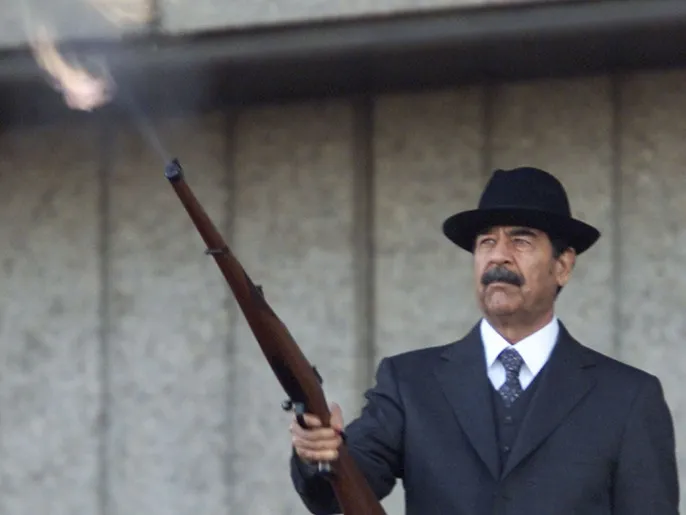
However, the American position changed in 1990 when Saddam threatened Kuwait because the Shia Iran differed from the Sunni Kuwait, and here the matter changed, as Washington resorted to public warnings, and did not send high-level envoys to try to reach a settlement until the last moments.
Piro says that Saddam was convinced of American intelligence's ability to intercept his communications, which is why he rarely used the phone after 1990 and never touched a computer. He believed that Washington knew that Iraq did not possess weapons of mass destruction, but he deliberately hinted at having them to intimidate Iran, as Saddam was intensely obsessed with Iran.
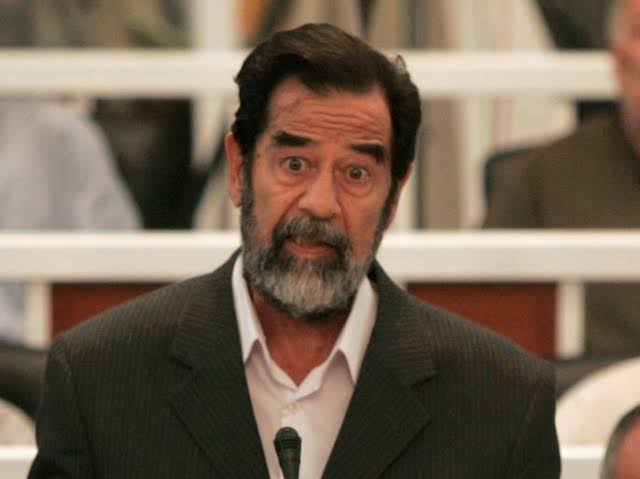
The most important lesson is understanding the adversaries.
The former investigator concludes that the most important lesson from his experience with Saddam does not relate to exonerating the man or downplaying his crimes, for he was a tyrant who imprisoned, tortured, and killed his opponents, using chemical weapons against his enemies and his people, and sent hundreds of thousands of men to their deaths. However, he believes that understanding adversaries remains a necessary condition for making sound political and military decisions.
He warns that the danger of misunderstanding adversaries still exists in a world where challenges of misinformation, cyber wars, and manipulation of artificial intelligence are increasing, pointing out that U.S. leaders should not assume that their adversaries, such as Iran, Russia, China, and North Korea, will adopt the American perspective simply because Washington presents it to them, or that they necessarily seek to make deals on its terms.
Piro concludes that the United States paid a heavy price for regime change, and it would be tragic to multiply that cost if Washington does not learn the lessons of the past and falls again into mistakes of misjudging its adversaries.