Iranian Foreign Minister Seyyed Abbas Araghchi confirmed today, Sunday, that "the Iranian seven-point initiative is still on the table, and if America adheres to the conditions, the Strait of Hormuz will be opened on the sixth day, and negotiations will resume on the seventh day," emphasizing that "Iran will never succumb to threats.
During a press conference in Baghdad, where he is participating in the fifty-second session of the Organization of Islamic Cooperation's Council of Ministers, Araghchi, responding to a question about the threats posed by the Americans, said: "Our response has always been clear; we will never yield to threats. We are well capable of defending ourselves." He added: "We are more prepared to defend ourselves than we were in the past, and more ready than we were in previous wars. We have gained valuable experiences, we are now more ready, and we can fully defend ourselves." The head of the diplomatic corps continued: "Moreover, we are also ready to follow a diplomatic approach, as long as it is respectful and honorable and guarantees the rights of the Iranian people; this is what the international community sees from Iran." Iran is capable of dialogue and logic, as well as fighting. Araghchi clarified: "We presented our seven-point plan and the seven-day plan in New York, stressing there the importance of diplomatic avenues, and countries are interested in the region not having a greater capacity to confront threats and conflicts, and are seeking to find a peaceful solution. The Islamic Republic of Iran is a leader in this field and has shown its determination to follow this path." He stated: "We are moving forward in both tracks together, and the international community must know, and it does know, that the Islamic Republic of Iran is capable of dialogue and logic, always seeking peaceful solutions; but at the same time, it is also capable of fighting and defense, and will not hesitate to use all its capabilities to protect its sovereignty and interests."
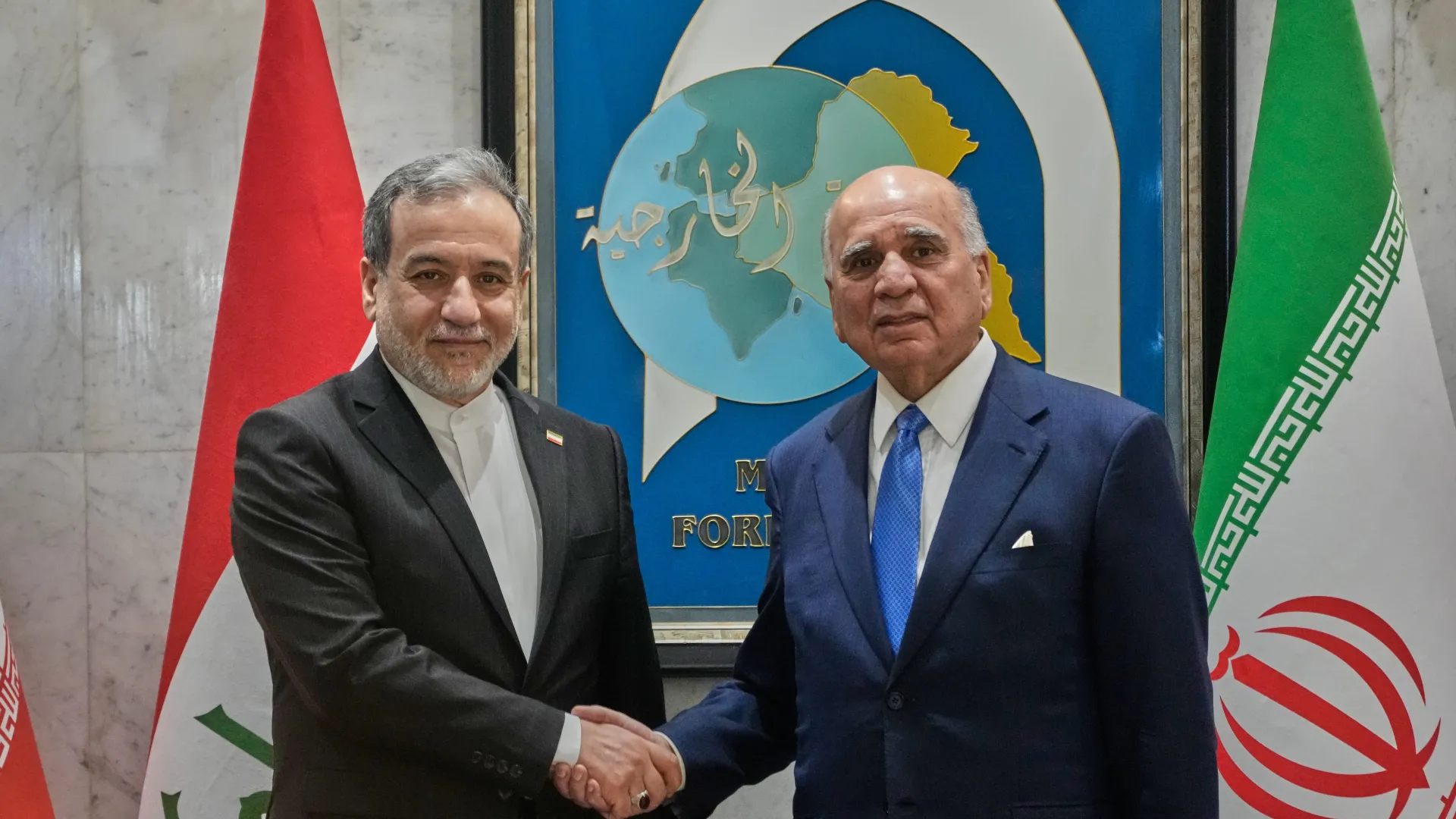
Iran's plan is still on the table. Regarding the Qatari Foreign Minister's statements about Iran's seven-day plan, and whether Iran will review its nuclear file, Araghchi said: "Our conditions are completely clear, and they were presented to the American side in the form of a seven-day plan. The American side has expressed some opinions and presented them, and we are currently studying them." He added: "In our view, the Iranian plan is still on the table, and if there is any degree of honesty from the American side – which there is not – then opening the Strait of Hormuz would proceed along a clear path, and if they adhere to those conditions, the strait will be opened on the sixth day, and negotiations will resume on the seventh." Iran's conditions are not strange. He continued: "Our conditions are not unusual. All of them are the conditions that America previously committed to in the previous memorandum of understanding and in other negotiations. The conditions are completely fair, and we believe that if America has the will to open the Strait of Hormuz, it can fulfill these conditions within a few days, and the strait will be opened." Regarding the meeting of the Council of Ministers of the Organization of Islamic Cooperation in Baghdad, Araghchi said: "This year, the presidency of this meeting has moved to Iraq. Iraq is of great importance to us as a friendly and neighboring country, and Iraq's success in managing this organization efficiently will be very significant." He continued: "This meeting has received great appreciation from the countries, with around twenty foreign ministers and more than twenty deputy foreign ministers attending. Unfortunately, the Organization of Islamic Cooperation has lost much of its significance in recent years for various reasons, including the lack of a strong Secretary-General, in addition to other factors that have hindered its presence and effective influence on issues concerning the Islamic world.
Araghchi added: "We hope that this organization will regain its momentum and participate more actively in issues concerning the Islamic world, and we expect it to play a constructive role in resolving conflicts between Islamic countries." We express our reservations. Regarding the final statement and the resolutions issued in the Baghdad meeting, Araghchi said: "The resolutions have not yet been adopted, and the final statement has not been completed. My colleagues have been trying for the past few days to incorporate them into all the resolutions. The vast majority of the resolutions are a repeat of last year's decisions." He continued: "Serious discussions took place during the meeting regarding the issue of Yemen. The Saudis had their own opinions, and we expressed our views, while other countries similarly called for the adoption of a resolution in this regard, which has not yet been adopted. Araghchi stated: "We hope that fairness and balance will be considered in this resolution and the final statement of the meeting, and if this is not achieved, Iran will not be able to join them and will certainly distance itself from the issued decisions and the specific resolution, and will express reservations. It depends on the text of the resolution. The foreign minister added: "The bloc of member states in the Organization of Islamic Cooperation, which agrees with Saudi positions, forms an important bloc, and this is a fact that we must take into account. Of course, we have made concerted efforts in this regard, and I have clearly stated in my speech what the fair solution is, and we hope it will be taken into consideration."
Lebanon. The Iranian Foreign Minister stated regarding his meeting with his Lebanese counterpart, Joseph Raji, in Baghdad yesterday: "It was a meeting characterized by respect, but it was very serious and candid. We have many differences in viewpoints with the current Lebanese government regarding how to solve issues in Lebanon. We discussed these issues to some extent, but the point we agreed on is the necessity of considering the relations between the two governments and Iran's relations with the Lebanese community and working to develop them." Araghchi continued: "I confirmed that the Islamic Republic of Iran is interested in establishing comprehensive political, economic, and cultural relations with Lebanon like any other country, and that Lebanese internal issues are a concern of the Lebanese themselves. If Lebanese factions, for which Hezbollah is the most important and most present in the Lebanese community, wish to make any decisions, it is natural for Iran not to oppose them, because these are Lebanese internal issues." He went on to say: "We discussed the issue of the Iranian ambassador in Beirut and other issues where there are differences in opinion, and good results were reached on how to overcome these issues and think about a better relationship between the two governments."
#Abbas_Araghchi #Iran_Conditions #Strait_of_Hormuz #Organization_of_Islamic_Cooperation #Lebanon