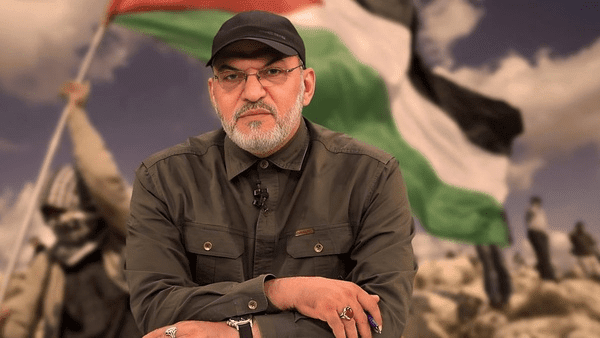
The Secretary General of the Iraqi Sayyid al-Shuhada Brigades, Haj Abu Alaa al-Walai, confirmed that if Iran faces a real threat to its existence, we will undoubtedly participate in that battle.
Middle East Confidential conducted a special interview with Haj Abu Alaa al-Walai, followed by the News Video Agency, in which he answered various questions about the situation in Iraq and the region. *In response to a question from the newspaper about the role that the Sayyid al-Shuhada Brigades perform that the Iraqi state cannot fulfill, Haj Abu Alaa al-Walai said: Our current role is a jihadist one, aiming to do all possible good for Iraq and make sacrifices for it. We consider the American and Turkish presence an occupation, contrary to the position adopted by the government. This approach extends from our struggle against the previous regime, when we went to hardships in defense of our religion, sect, and homeland, up to the current phase, where the occupation is not limited to the military sphere, but also includes political occupation, control over Iraqi decision-making, interference in internal affairs, and investment and economy. *Middle East Confidential: Do you believe that you enjoy the support of the Iraqi public? What evidence do you rely on? Haj Abu Alaa al-Walai: Yes, we enjoy significant support and endorsement among the Iraqi public, and we have a broad support base among certain segments of society and within political and social circles. *Middle East Confidential: Who represents the Iraqi public better, your movement or the Sadrist movement? Haj Abu Alaa al-Walai: All components of the political scene deserve respect. The Sadrist movement is a large popular movement, and its role and influence cannot be denied, nor can its supporters be ignored. The factions also play a prominent role in protecting the political system and combating terrorism, just as the Sadrist movement played a decisive and pivotal role in the events of 2006. *Middle East Confidential: How do you assess the performance of the current Iraqi government?
Haj Abu Alaa al-Walai: It is difficult, and perhaps unfair, to assess the performance of the government in services and institutional matters, as it operates with only half a ministerial formation, amid the conditions of war, the crisis in the Strait of Hormuz, regional tensions, and the economic crisis. Nevertheless, it deserves praise for its success in avoiding Shiite-Shiite fighting and protecting Iraq from international isolation. We consider the judiciary an essential pillar of the Shiite state and governance, and it has contributed to maintaining the political system and combating terrorism and corruption. *Middle East Confidential: Was the experience of ruling coalitions led by Shiites, from the United Iraqi Alliance to the coordinating framework, successful? What needs to be changed if it was not? Haj Abu Alaa al-Walai: The political forces evolved from the Shiite alliance to the coordinating framework, which successfully formed governments quickly over the span of six years and navigated pivotal stages. However, the future of the framework remains in doubt, as representation within it is determined by the number of parliamentary seats. *Middle East Confidential: The Iraqi Prime Minister has repeatedly stated that your weapons must be handed over to the state and that those refusing to do so operate outside the law. How do you respond? Do you consider yourselves outside the law? Are you prepared to disarm, and what are your conditions for handing over to the Iraqi state? Haj Abu Alaa al-Walai: We have committed to the decisions of the quadripartite committee and the provisions of the sovereignty document, provided the other party commits too. *Middle East Confidential: Do you believe in Iraqi nationalism? Does an Iraqi official's loyalty to Iranian leadership on religious grounds reconcile with loyalty to Iraq?
Haj Abu Alaa al-Walai: We believe in nationalism and a relationship based on religious legitimacy that does not contradict it, as well as supporting the high religious authority in Najaf. An example of this is the defense of the shrine of Lady Zainab. We see no contradiction between nationalism and religious legitimacy, and we consider the issue of borders secondary. *Middle East Confidential: How do you describe your relationship with Iran? Is it total dependence, religious loyalty, financial support, or something else? Haj Abu Alaa al-Walai: Our relationship with Iran is historical, religious, and sectarian, and we view it as a neighbor and friend. It has provided us with support in various forms during the war against ISIS, from logistical support and training to weaponry and the presence of Iranian individuals. It is a deeply rooted relationship based on religion and neighborly ties that cannot be severed. Our blood has mixed on the battlefields and in the same trenches, in facing the enemies of our homeland, religion, and sect. Our last martyrs also fell alongside the companion of Sayyid Hassan Nasrallah, who were assassinated by Israeli aircraft immediately after leaving Iraq for Iran. *Middle East Confidential: If Iran is attacked, do you consider yourselves obliged to intervene militarily? Haj Abu Alaa al-Walai: Our approach in regional conflicts is based on participation in defense of the entire Shiite sect. If Iran faces a real threat to its existence, we will undoubtedly participate in that battle. However, if the threat is not existential, we will not participate, as we demonstrated during the recent war against Iran. *Middle East Confidential: How do you describe the role of the American embassy in Iraq?
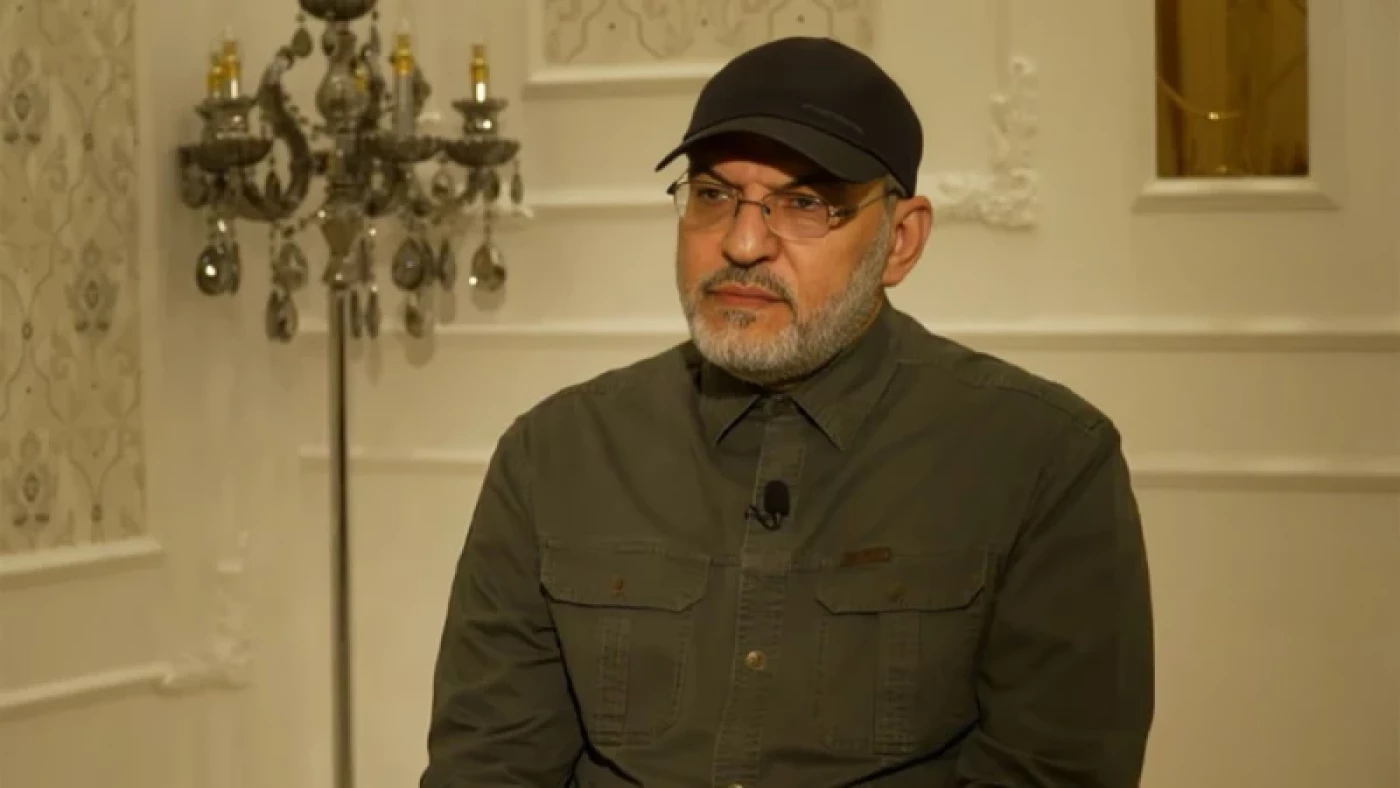
Haj Abu Alaa al-Walai: We consider the American embassy a source of evil, as it openly intervenes in Iraqi political decision-making and exerts pressure on political forces. It lacks popular acceptance, despite the welcome the Americans received when they entered at the beginning of the regime change. The American forces were militarily defeated in Iraq as a result of major operations and are no longer able to protect themselves. *Middle East Confidential: Do you think that the armed factions allied with Iran, like your faction, could someday establish a normal relationship with the United States? What would that require? Haj Abu Alaa al-Walai: Relations with the United States will never be normal as long as it is considered the "great devil" and continues policies that harm Iraq. There is also a clear message to the Kurdish and Sunni parties: America will abandon them, just as it abandoned the Syrian Democratic Forces (SDF), Afghanistan, and others. *Middle East Confidential: What is your opinion on the American withdrawal from Iraq? Do you see it as a goodwill gesture towards your factions? Haj Abu Alaa al-Walai: We believe that the Americans did not withdraw from Iraq; rather, they were defeated in it. The evidence for this is their acknowledgment during the forty-day war that the resistance factions carried out 600 military operations against them and their bases, while we believe the number is much higher, perhaps twice that. We also refer to Masoud Barzani's statement that the Kurdistan region suffered over a thousand operations, in addition to our operations against American bases in neighboring countries, Syria, Jordan, and Kuwait. Our operations did not limit themselves to American bases; they extended to pursuing American forces in hotels and homes after they left their bases.
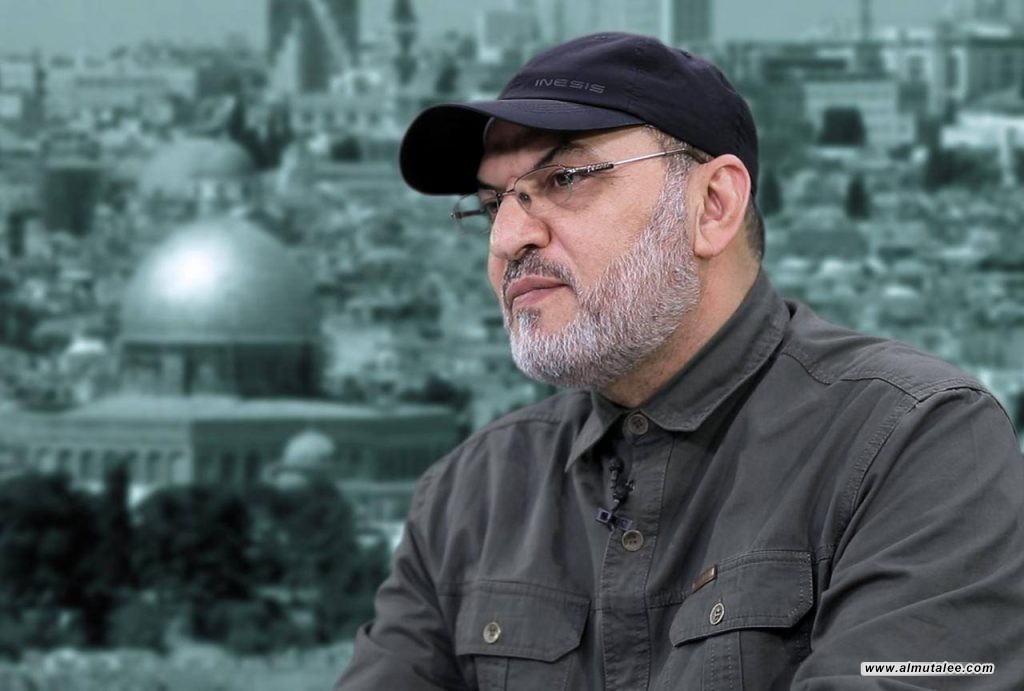
*Middle East Confidential: Are you concerned that Iraq is gradually alienating the Arab world, especially following the repeated attacks attributed to armed factions against Arab countries? Given that Iraq is a predominantly Arab country, what can it gain from losing the trust of its Arab neighbors? Haj Abu Alaa al-Walai: Building trust with neighbors in regional and international relations takes a long time, especially with countries that were involved in sending suicide bombers or allowed their military bases to be used to bomb Iraq. The government should leverage its official relationships to build strong and solid partnerships. Building trust takes time, while destroying it happens quickly. We urge the government to continue building trust with Iraq's neighbors and establish strong and clear relationships based on mutual interests and support for positions and respect. We support the government's efforts in this direction and have no intention as a faction to build relationships outside the framework of the state. Haj Abu Alaa al-Walai on the American bounty offered for information about him: "My being wanted by the Americans, with a significant bounty offered for information about me, has not limited my activities or movements, nor has it detracted from my role in bridging opposing views at times, de-escalating crises, and preventing conflicts and disputes from escalating, especially between the government and some factions. Recently, we have worked hard to bridge disagreements and reach a final agreement accepted by all parties that places the interests of the homeland and people above all other interests."
Haj Abu Alaa al-Walai on American attempts to prevent Iraqi factions from assuming executive positions in the government: "The Americans play a negative role by preventing certain factions, which have parliamentary representation, from assuming executive positions in the government. The members of parliament belonging to these factions arrived at the parliament through the votes of their constituents and via the ballot boxes, not by using weapons. We reject this intervention that violates Iraq's sovereignty and the independence of its decision." #المقاومة_العراقية#الحاج_أبو_آلاء_الولائي#كتائب_سيد_الشهداء#ايران#تهديد_وجودي