In southern Lebanon, with the sound of Fairouz singing: “Wars ignite... and wars extinguish... and you remain my beloved, oh soil of the south,” Fatima Khalifa, known as "Lady of the Bridges," welcomed us into her garden in southern Lebanon.
The smell of coffee wafted from the cups, while the fragrance of jasmine mingled with the lemon and orange trees, and the table was scattered with the bounty of the land; olives, olive oil, and labneh, alongside "thyme dough" that Fatima prepared from crushed wheat and fresh thyme.
In that place, the south felt like more than just geography; it was present in the details of the home, the garden, and the table, and in the stories of a woman whose name is tied to the land and the bridges that hold the memory of the place.
Amid the scent of earth and the perfume of jasmine, the scene seemed like a brief respite from the time of wars, where life recollects its small details, and the land insists on giving its people what remains of its goodness, despite all it has endured.
Fatima does not need many words to explain her relationship with the south; it is enough for her to point to an olive tree or a stone bridge or an orchard surrounding the house for the story to begin. Everything around her carries something of the place where she grew up; from the scent of the soil to the taste of the food, from the trees she has known since her childhood to the paths she memorized of her ancestors from generation to generation.
Fatima tells Al Jazeera.net that for her, the south is not just a place where she was born or a house to which she returns, but it is “the soul, the belonging, and the small homeland.” When we ask her about the secret of this attachment, she does not look for a distant answer, but invites us for a tour of her garden.
She says that anyone who smells the scent of lemon and olives, tastes the food of the land, and walks among the trees will understand alone why southerners are so attached to their place.
For in the south, the land does not seem just a geographical space; the tree planted by the grandfather could become a member of the family, and the piece of land that gathered its members during the harvest season transforms over time into part of the memory, while the road to the house remains etched in the conscience just like the features of relatives.
As the years go by, these small details accumulate to create a memory larger than the place itself; a memory that binds a person to the land that embraced their childhood and youth, making it hard to separate the two.
The south, which is sensed before it is seen
Perhaps this is why the people of the south speak of the air as they would of a family member; Fatima says, “The air of the south is different, its taste is different, and even its soil is different,” and she does not speak of a difference that can be measured, as much as she describes that feeling that precedes returning to the place; a feeling that begins before the eye reaches it, when the memory recalls scents it has known since childhood.
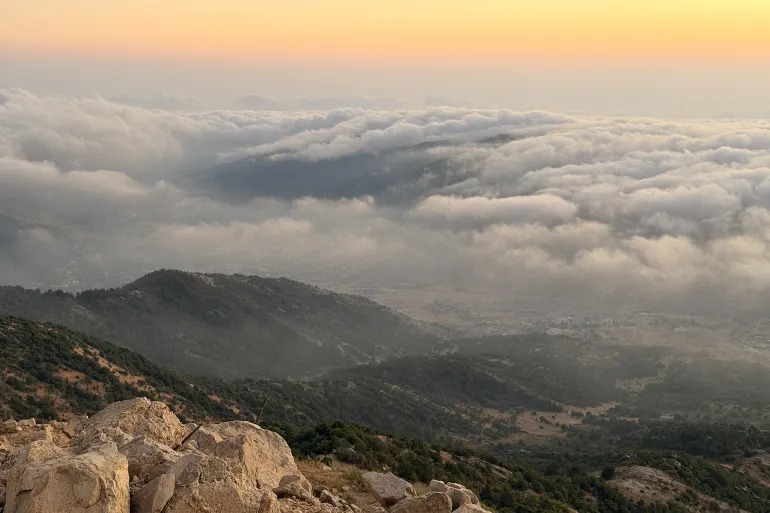
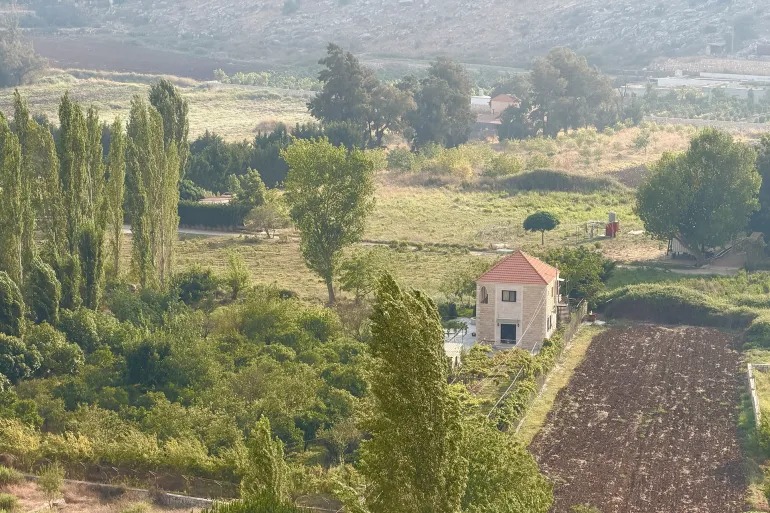
In this area that stretches from the Mediterranean coast in the west to the hills and highlands inland, nature seems to be part of daily life, not just a scene. In the plains, orchards of citrus and bananas spread, while in other areas, fields of tobacco and olives extend, and fig and grape trees are dispersed among the villages and highlands.
Here, agriculture is not only linked to income. The land is a space where the full cycle of life is lived; from planting to harvesting, from the seasons of picking to family gatherings that, in turn, create the memory of the place.
Perhaps the olive tree embodies this relationship more than anything else. The tree may be older than the house itself, inherited by its owner from his father, and passed down by his father from his grandfather. It grows before the family, while the generations around it change, and it remains a witness to all that has happened in the place.
This is why Fatima says that the olive tree is “her companion, her heritage, and her pride,” and that it is the thing that remains present with her wherever she has to go.
A land its people left, but did not leave them
For departure is a heavy part of the memory of the south; for decades, the inhabitants of the villages—especially those near the borders—have been accustomed to carrying what they can and leaving their homes under the weight of wars and bombardments, then waiting for the moment that allows them to return.
Absence may last only hours or extend for months, and the distance between leaving and returning might prolong beyond what one can endure, but the idea of returning remains present.
Fatima says that her generation "grew up with all the years of their lives in displacement," but in her view, displacement did not succeed in severing the link with the place. They would leave, carrying a certainty that returning was possible; then they would return to plant, build, and resume their lives from the point where they had stopped.
Thus, for her, returning does not seem merely like the end of displacement but a restoration of a relationship that was forcibly severed but not ended by will.
A returnee may find their home damaged, their field burned, or their tree cut down, but they begin from what remains; they open the door of the house, repair a wall, plant a tree, and then look at the land they know as if they are reclaiming a part of their life.
Geography that created beauty and burdened history
This attachment to the land cannot be understood without considering the geography of the south. The region lies in the far south of Lebanon, along the border with occupied Palestine, extending from the Mediterranean coast in the west to a chain of hills and highlands in the east.
Between the coast and the interior, the terrain varies between fertile plains, valleys, and highlands; this nature has given the south agricultural and aesthetic value, but it has also endowed it with military and geopolitical importance that has placed it at the heart of conflict for decades.
The highlands that the locals see as hills and fields and trees may hold a different meaning in military calculations; those who control them have greater capabilities for observation and monitoring. Additionally, the valleys and pathways that residents use to reach their villages and lands may transform in wartime into sites of strategic value.
Military expert Brigadier General Hassan Jouni explains to Al Jazeera.net that the south's importance cannot be separated from its geographical location and diverse terrains, noting that some highlands overlooking vast areas provide military importance to whoever controls them, while certain valleys and pathways can become influential points in any confrontation.
Jouni believes that the position adjacent to the border, along with the nature of the land and its elevations, has contributed to making the south a battleground for decades, and has given some locations strategic significance that exceeds their geographical area.
This paradox is clearly evident in sites like the Shaqif Castle, which stands atop one of the most prominent highlands of the south, revealing a vast expanse of the surrounding area. The castle, viewed by visitors as a historical monument that embodies layers of time, simultaneously holds a strategic value that has kept it present in the history of military conflicts over the south.
From above, the scene that the region’s inhabitants know well appears: scattered hills and villages, fields of olives, and roads winding between the highlands leading to the border.
Here, two stories intersect in the same place; the hill that means to the farmer a piece of land inherited from his father could mean to the soldier a vantage point. The valley that residents traverse to reach their villages could become, in the calculations of war, a pathway of strategic importance.
The geography is the same, but the significance of the place changes depending on the eye that observes it.
Beyond the image of war
For many years, the south has been associated in media memory with images of bombing, occupation, destruction, and displacement, to the point that these images nearly obscure the life that continues behind them.
But the south known to its children is not encapsulated in the smoke of war; it is mornings that begin with coffee, farmers heading to their fields, mothers preparing food from the bounty of the earth, harvest seasons that gather families, and children growing up memorizing the names of trees, fields, and valleys.
Thus, for many of the children of the south, returning appears as an action that transcends merely reclaiming a home.
When the land becomes part of the person
Before we leave, Fatima encapsulates all this story in a few words: “I love you, my homeland, I love you, my south, I love you, my land; we do not just love the south, we adore our south,” and Fairouz’s song returns to the background: “Wars ignite... and wars extinguish...”