A report published by the Financial Times indicated that the current Israeli government, led by Benjamin Netanyahu, is working diligently to accelerate settlement expansion in the occupied West Bank and Jerusalem ahead of the upcoming legislative elections to impose new facts on the ground that will be difficult for any future government to reverse.
The newspaper quoted Yonatan Mizrahi, an official from the Israeli human rights organization "Peace Now," saying: "It is clear that the government is trying to impose facts on the ground that will be extremely difficult for the next government to change."
Unprecedented Violence
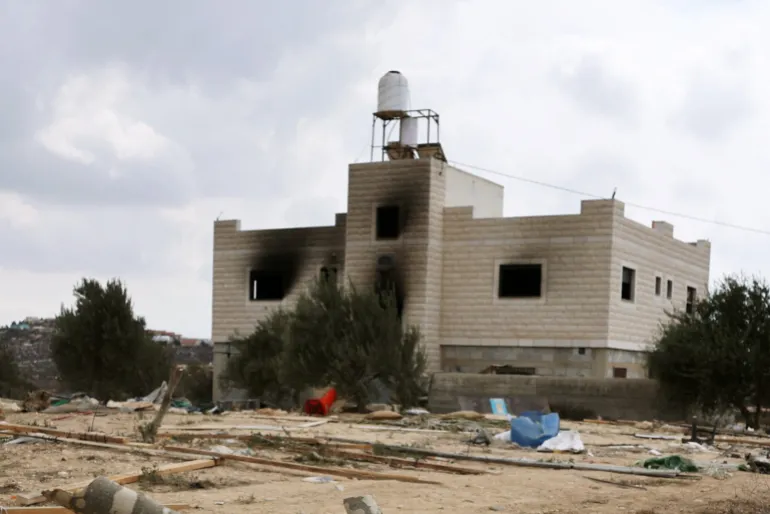
This settlement escalation has led to an unprecedented wave of settler violence against Palestinian residents and their properties, resulting in the displacement of thousands of people and the destruction of many Palestinian residential communities.
These violations occur amid complete impunity, as judicial rulings against the perpetrators from the Israeli side are very rare according to human rights data.
A study conducted by the Israeli human rights organization "Yesh Din" confirmed that only 3% of Israeli investigations into violations committed by settlers against Palestinians in the occupied West Bank between 2005 and 2024 resulted in convictions of the perpetrators of those assaults.
According to the United Nations Office for the Coordination of Humanitarian Affairs, settlers have launched 6,100 attacks on Palestinians and their properties in the West Bank since the governing coalition led by Netanyahu took office in 2022.
Settler violence, supported by Israeli government policies, has led to the displacement of more than 6,500 Palestinians and the complete or partial displacement of 132 residential communities in the occupied West Bank.
Violence as a Tool for Settlement Expansion
Officials from the Israeli "Peace Now" movement believe that attacks by settlers directly pave the way for the establishment of new settlements and outposts, with Mizrahi stating that violence has also facilitated the creation of new settlements, explaining that the "Metzuki Eretz" settlement was among several new settlements established on or near the sites of displaced residential communities.
These assaults coincide with official decisions led by extremist ministers, as Finance Minister Bezalel Smotrich requested the allocation of 36 million shekels (about 11.7 million dollars) for registering land in the West Bank and East Jerusalem, a step that human rights organizations warned could pave the way for a massive takeover of Palestinian lands for the benefit of the Israeli state.
These policies culminated in the controversial "E1" settlement project, where the Israeli Ministry of Construction and Housing issued tenders for the construction of 3,300 housing units that will lead to the isolation of East Jerusalem and divide the West Bank into two parts.
Plans and Objectives
The Israeli government also announced plans to build 19 new settlements in the northern occupied West Bank and to return to previously evacuated settlements like "Kadim," aiming to encircle the city of Jenin and dismantle Palestinian geographical connectivity.
Smotrich publicly declared that these plans aim to "bury" the idea of a Palestinian state and prepare to accommodate one million new settlers in the West Bank.
The Financial Times reported that diplomats stated the extent to which the new government will change its course depends on the parties that will form the governing coalition after the legislative elections scheduled for October 27. They pointed to several existing scenarios. However, current opinion polls suggest that the most likely option is a coalition led by Gadi Eisenkot that includes the current Israeli opposition.
Given the close opinion poll results regarding the candidates' chances in the legislative elections and the differing political directions of the Israeli opposition, the forecasts regarding the ability of any future government to change the path of settlement expansion and curb settler violence are contingent on the nature of the coalition that will govern Israel after the elections.