Recent images published of the destruction of the airborne early warning and control aircraft "E-3 Sentry" at Prince Sultan Air Base show how Iran managed to render one of the most important detection, warning, and guidance points for U.S. air operations in the heart of Saudi Arabia out of service by bypassing the multi-layered defense network in "Al-Kharj."
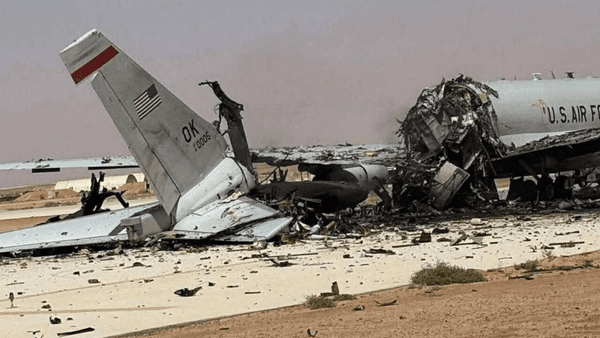
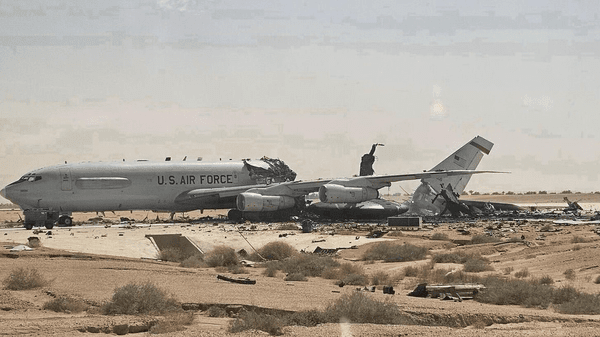
A report published by the American CBS network and followed by the American Al-Khalij News revealed new images over the past few hours showing the damage caused by Iranian missile and drone attacks on U.S. military sites in West Asia; these images provide a close-up view of the wreckage of the airborne early warning and control aircraft "E-3 Sentry" at Prince Sultan Air Base in Saudi Arabia. In these images, the rear section of the four-engine "E-3" is directly targeted, with its tail separated from the burning fuselage, and the rotating radar system mounted atop the fuselage is destroyed. CBS obtained the images from American military personnel under the condition of protecting their identities. One of these soldiers admitted to the extent of the damage, saying that the reality of the losses inflicted on U.S. bases has not been adequately communicated to the public in the country. The new images only show the end result of the attack, but studying the current narrative of the operation's design reveals that the destruction of the American airborne early warning and control aircraft (AWACS) was not the result of an accidental hit, but rather the result of target identification, studying the operational pattern of the base, choosing the right timing, and designing primary and misleading paths to penetrate enemy defensive networks.
*AWACS Headquarters in the Heart of Saudi Arabia Prince Sultan Air Base in Al-Kharj, south of Riyadh, was the operational base for this aircraft; it is considered one of the most important centers for the deployment and support of U.S. air forces in the region. The geographical location of the base deep in the Arabian Peninsula, its distance from the Iranian border, and the presence of radar systems, defensive systems, and fighter aircraft all suggested to American leaders that Al-Kharj Base could be a safe area for storing strategic aircraft. The defensive coverage of the base was not limited to ground systems, but included Patriot missiles, early warning radars, and patrols of fighter aircraft that formed the main layers of air defense for the area, in addition to attack helicopters and ground units responsible for protecting the area surrounding the base. Before the war, satellite images showed the presence of no less than 43 military aircraft stationed at Prince Sultan Air Base, including 13 KC-135 refueling aircraft and 6 E-3 Sentry early warning aircraft. This deployment made Al-Kharj Base a major support center for U.S. air operations, but at the same time created a significant vulnerability. Due to their large size, the early warning and refueling aircraft cannot be housed in many conventional hangars and are often parked in designated areas and open spaces within the base. Thus, if the attackers’ munitions managed to breach the layered defense barrier, they would encounter some of the most important U.S. air assets.
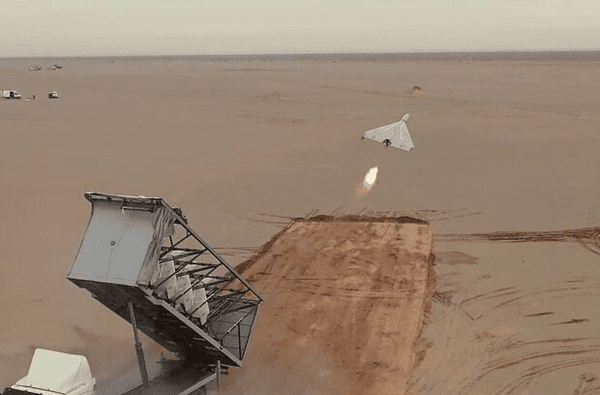
On the other side of the field, a team of engineers, operational planners, and drone operators was working on solving a complex problem: how to penetrate a network protected simultaneously by ground radars, defense systems, early warning aircraft, and patrol aircraft? One of the tools available to Iran was the Shahed 136 drone; a relatively small aircraft capable of flying at low altitudes and following pre-planned indirect paths. The advantage of this drone is not limited to its range; its ability to approach the target area from unexpected directions, its reduced radar cross-section, and its low cost compared to intercept missiles make the Shahed 136 a suitable tool for penetrating and degrading the defense network. Of course, the challenge in the Al-Kharj operation was not limited to breaching the Patriot system. Enemy air patrols could detect and destroy attacking aircraft before they entered the target area. Additionally, AWACS, with their extensive radar coverage, could provide fighter aircraft and command centers with information about the flight paths of the targets. Therefore, before designing the attack route, it was necessary to determine the activity pattern of these aircraft.
Based on the plan developed for the operation, the mission team spent hours studying the flight pattern of the AWACS based in Al-Kharj. The aircraft would take off from Prince Sultan Air Base, fly on a relatively fixed path for several hours, then return to the same base for refueling, crew changes, or maintenance. The aim of this pattern was not to engage with AWACS in the air but to determine when the aircraft would stop at a designated point in the base after completing their mission, where they could not be moved quickly. Due to its large size, wingspan, and the radar screen mounted on top, the airborne early warning and control aircraft E-3 is not an easily movable target between different points in the base or hidden in any hangar. Hence, its stopping position and flight cycle could be taken into account when calculating targets. An operational window is created when the airborne early warning and control aircraft (AWACS) returns to the base and is on the ground, while the enemy's air network remains engaged with ongoing missions. This window is limited, and any delay in it could result in changing the target or increasing defensive readiness.
Path Battle Before Reaching the Target To reach Al-Kharj, choosing the shortest route was not necessarily the optimal option. The direct route would pass the drones through areas of high radar and defensive density, increasing the likelihood of early detection. Therefore, flight paths were designed so that the aircraft approached the area from indirect axes, using the terrain of the area to reduce the likelihood of detection and mislead the defense network regarding the main direction of the attack. At the same time, deceptive paths were activated. The goal was to make the enemy radar display targets from multiple directions, forcing the command system to identify, classify, and allocate weapons to respond to threats within a limited timeframe. Each deceptive target can occupy a part of the detection, interception, or defense munition capacity. In such circumstances, it is not only the number of drones that matters, but also the angle of approach, time of arrival, altitude of flight, and synchronization of multiple targets in front of the defense network are crucial factors. As the operation time approached, the presence of enemy air patrols posed a new obstacle. Continuing with the mission was fraught with the risk of detecting the drones, but any further delay could waste the opportunity. At that moment, the control room decided to take this risk. Thanks to the efforts of the flight crew and technicians, the drones were launched from their platforms successively, and both the main and deceptive routes were activated simultaneously.
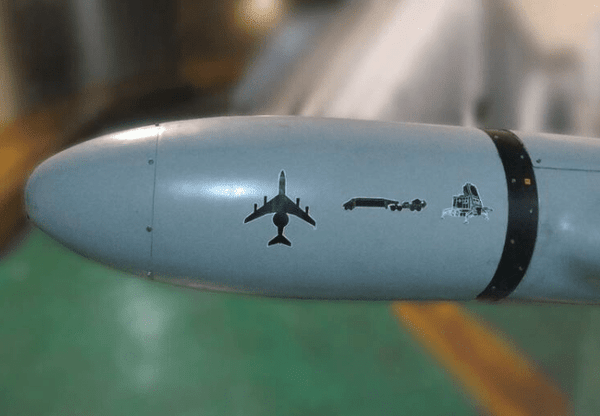
The Moment of Penetrating the Defense Network The most sensitive phase of the operation was flying for several hours through the coverage of the enemy's ground and air radars. The drones had to reach the target area within a specified timeframe without deviating from the path. Changes in weather, navigational errors, or early detection could all disrupt the entire operation plan. After carrying out the attack, initial reports were conflicting, and the fate of the main target could not be definitively confirmed. However, the initial images published showed the destruction of at least one E-3 Sentry aircraft at the base, in addition to damage to several refueling aircraft. New images captured by CBS more clearly show the results of the operation: the collision with the rear of the airborne early warning and control aircraft (AWACS) caused the tail to separate from the fuselage and caused severe burns in the area where the radar is located. The type of missile or drone that hit the E-3 has not been officially determined yet, but one undeniable fact remains: at least one of the attacking aircraft penetrated the detection and engagement systems and accurately reached one of the most important American aircraft.
*The Target Was Not One Aircraft, But an Air Network The airborne early warning and control aircraft E-3 Sentry is not just a reconnaissance aircraft. It is equipped with a rotating radar, communications systems, and information processing systems, and is considered one of the most important command and control centers for U.S. air operations. The AWACS can detect and track aerial targets, create a comprehensive picture of the battlefield, warn of incoming threats, and direct fighters to intercept or attack. Thus, the aircraft acts as the eyes and brain of the enemy's air network. Destroying the airborne early warning and control aircraft (AWACS) means simultaneously eliminating an airborne radar, an information processing center, a communications hub, and an airborne command center. Unlike drones or conventional fighters, this aircraft cannot be replaced in the short term. The damage to the refueling aircraft at the very same base reveals another dimension of the operation. The E-3 Sentry provides an overarching view of the air network while allowing fighters to operate at greater distances and for longer durations. As a result, targeting these two groups of aircraft dealt a severe blow to the infrastructure on which the combat power of U.S. fighters relies. Instead of engaging in costly battles with a single fighter, Iran targeted vital points on which the entire enemy air network depended.
*The End of the "Secure Depth" Concept The strategic message of the Al-Kharj operation goes beyond merely destroying one airborne early warning and control aircraft (AWACS). The United States transferred some of its valuable assets from bases near Iran deeper inside Saudi Arabia to ensure its security through a wider range, longer warning times, and more comprehensive defensive layers. However, the arrival of Iranian aircraft at Prince Sultan Air Base proved that geographical distance does not necessarily mean immunity from a combination of range, precision, intelligence, intricate paths, and operational deception. The Al-Kharj operation demonstrated Iran's ability to identify sensitive points in the enemy network, monitor the activity pattern of a strategic target, design a long-range mission, and deliver munitions to a point deep within Saudi territory. The loss at Al-Kharj was not just an expensive aircraft; it also targeted the American concept of "secure depth" in the region. Finally, that eye, which was supposed to monitor Iranian aircraft movements from hundreds of kilometers away and direct enemy fighters to confront them, was compromised on the ground of one of the most fortified bases in the region. #Iran #Hunting #American_AWACS_Aircraft #Falcon_Eye #Saudi_Arabia