The big surprise in the 2026 U.S. midterm elections was not just the success of the Democrats in defeating the Republicans but the nature of the victories they achieved, the states they managed to penetrate, and the new political figures that emerged from the elections, in a shift that could extend beyond the balance of power within Congress to the future of the two main parties in the United States.
From Texas to Kansas, Iowa, and Ohio, the Democrats succeeded in making inroads into states that were considered strongholds of the Republicans, while a number of candidates close to President Donald Trump suffered defeats that carried personal and political implications that went beyond the boundaries of local races.

At the same time, the results revealed the rise of a new generation of Democratic politicians, combining democratic socialism and progressive populism, and presenting a religious Christian discourse that differs from the conservative rhetoric that has dominated the relationship between religion and American politics in recent decades.
The following are the top 10 results from the U.S. elections, and what they indicate about the future political landscape:
1. Texas: A Double Defeat for Trump and the Rise of James Talarico
Democrat James Talarico's victory for the Senate seat in Texas at the expense of former Republican Attorney General Ken Paxton is a significant political blow to President Donald Trump.
But the defeat is not limited to the loss of a Republican seat; it also represents a personal failure for Trump, who intervened to support Paxton in the Republican primary and helped him defeat veteran Senator John Cornyn, despite concerns raised by Paxton's nomination within the Republican establishment.
Paxton had faced a series of scandals and accusations related to abuse of power and corruption, including an impeachment charge in the Texas House of Representatives in 2023, before being acquitted by the state Senate. He also faced previous allegations of securities fraud that ended in a settlement without a criminal conviction.
Thus, his loss carries three overlapping implications: the loss of a historic Republican stronghold, the failure of Trump's personal bet on Paxton, and the defeat of a controversial political model within the Republican Party itself.

In contrast, Talarico emerged as one of the rising faces of the Democrats, not only for his youth but for his ability to leverage his Christian theological studies to present a progressive discourse that challenges the religious right's monopoly over Christian discourse in American politics.
2. Ohio: Amy Acton Defeats Trump's Candidate Vance
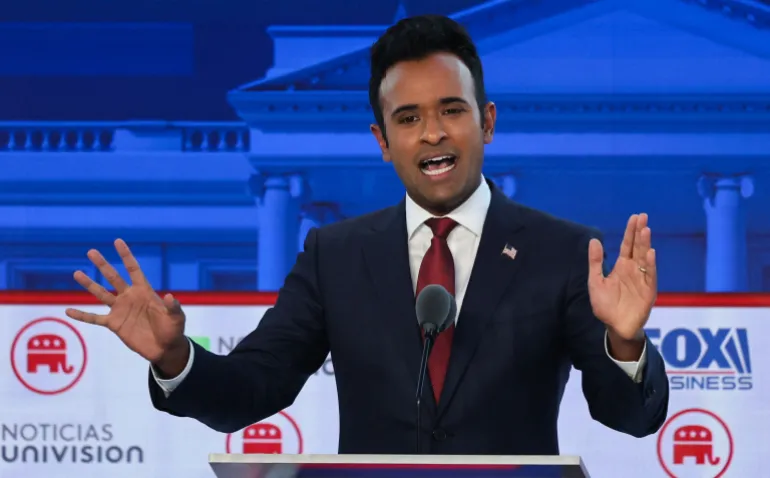
The second personal defeat for Trump occurred in Ohio, where Democratic physician Amy Acton won the governor's race against billionaire businessman Vivek Ramaswamy, one of Trump's prominent allies and supporters.
This result carries exceptional importance, as Ohio has transformed in recent years into a Republican stronghold and is the birthplace of JD Vance, the vice president, and his original political base.
Trump had early supported Ramaswamy after the latter withdrew from a government efficiency management initiative associated with Elon Musk.
However, the race witnessed a notable turn when Ramaswamy's campaign released a controversial electoral advertisement featuring Acton's mother, whom she had been estranged from for decades, accusing her daughter of lying about her childhood.
The advertisement sparked wide criticism from both parties, particularly after old court and journalistic documents showed evidence supporting Acton's narrative of having been abused in childhood, including allegations against her stepfather of sexually assaulting her when she was twelve. The case did not reach trial as the accused and his wife left the area.
The advertisement transformed from an attempt to discredit the Democratic candidate into a source of embarrassment for Ramaswamy's campaign, before the election concluded with Acton's victory.
3. Kansas: A Historic Victory for a Democratic Pastor
Among the biggest surprises of the election was the victory of Methodist pastor Adam Hamilton for the Senate seat in Kansas at the expense of Republican Senator Roger Marshall.
The significance of this result lies in the fact that the state has not elected a Democrat to the Senate since 1932, when George McGill was re-elected, making Hamilton's victory a break of a 94-year Republican dominance.
Hamilton is not a traditional politician; he is the founder of the United Methodist Church of the Resurrection, one of the largest Methodist churches in the United States, and has a significant presence in religious discussions about tolerance, social justice, and the relationship between faith and politics.
He presented himself during the campaign as an independent-thinking Democrat, seeking to engage moderate voters and dissatisfied Republicans with the party's polarization.
His victory gains additional importance when compared to Talarico's win in Texas, as both victories hint at the rise of a new trend within the Democratic Party, which re-casts Christian values not to defend religious nationalism and strict social conservatism, but to present a political vision based on social solidarity, justice, and intellectual moderation.
While Hamilton represents an extension of Methodist social Christianity, Talarico draws inspiration from progressive Protestant traditions, providing the Democrats an opportunity to reclaim part of the religious voter base that has long been associated with the Republican Party.

4. Iowa: Josh Turick Brings Democrats Back to the Senate
In Iowa, Democrat Josh Turick achieved an important victory over his Republican opponent Ashley Hinson in the race for the seat previously held by Republican Senator Joni Ernst.
This victory is significant due to the political shift the state has undergone; Iowa voted for Barack Obama in the 2008 and 2012 elections before gradually shifting to support Donald Trump, who won there three consecutive times.
Turick, a state representative and former wheelchair basketball player who participated in the Paralympic Games, represents a centrist Democratic stream, focusing on economic issues and voters' daily lives.
Former President Barack Obama notably supported him, appearing with him in an electoral advertisement that combined basketball with politics in an attempt to regain the electoral coalition that had previously granted Obama victory in the state twice.
5. Michigan: Abdol Al-Sayed's Victory
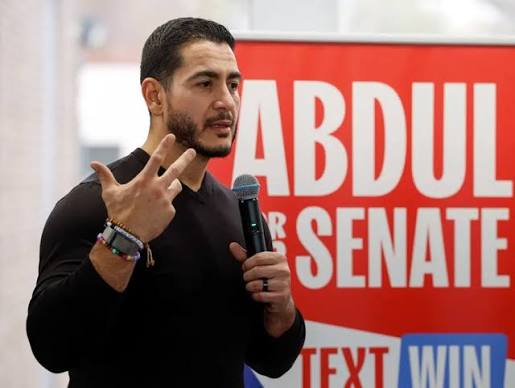
Perhaps the victory of the Egyptian-American Abdol Al-Sayed, politically known as Abdol Sayed, was one of the most significant triumphs of the progressive stream within the Democratic Party.
Sayed managed to defeat Republican Mike Rogers despite a fierce political and electoral campaign aimed at weakening his chances, involving forces from inside and outside the Democratic Party.
Groups linked to the Israeli lobby, including AIPAC's major political action committee, spent significant amounts during the primary elections to support his Democratic opponent Haley Stevens, who lost to him by a narrow margin.

The confrontation did not stop at the primaries, as Stevens announced her support for Republican candidate Mike Rogers just two days before the general election, in a defection that angered Democratic Party leaders.
Sayed also faced attacks related to his positions on Israel and the war on Gaza, alongside a Republican campaign that focused on his religious and political background.
Despite this, the Muslim candidate was able to establish a clear advantage in the electoral race, enhancing his status as one of the most prominent rising progressive figures at the federal level.
His victory calls to mind that of New York Mayor Zahraan Mamdani, who managed to utilize a populist economic discourse and wide public presence to overcome reservations about his Islamic identity and leftist positions.
However, what is occurring carries an additional significance, as Abdol's victory comes in a race for a Senate seat in a swing state against a Republican candidate backed by Trump, rather than in a local race within a clearly Democratic majority city.
6. New York: Socialist Democrats Expand Their Presence
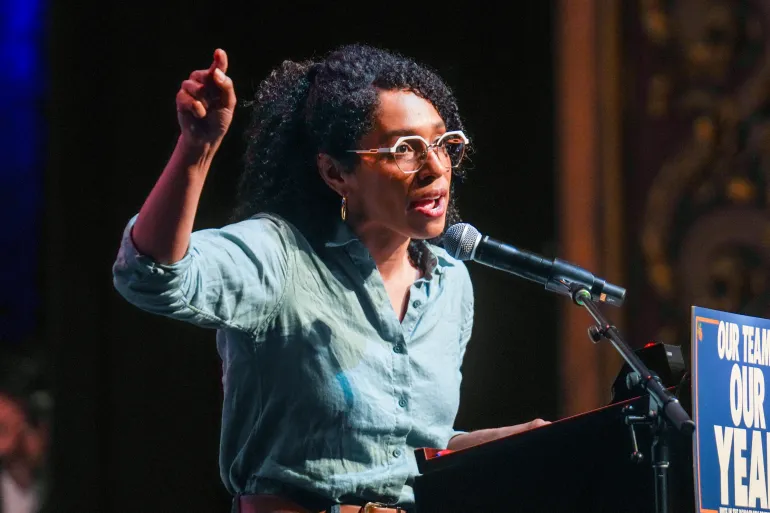
Abdol Sayed was not the only progressive face in the elections, as socialist Democrats achieved important gains in New York, with Daryaliza Avila Chevalier and Claire Valdez winning two seats in the House of Representatives.
Avila Chevalier stands out as one of the most interesting new figures; she is a researcher and political activist of Dominican descent, who studied the Middle East at Columbia University and engaged in activism supporting Palestinians before converting to Islam.
She achieved a significant surprise during the primaries by unseating veteran Democratic Representative Adriano Espaillat from New York's 13th district, with support from socialist Democrats and the city’s mayor Zahraan Mamdani.
In the seventh district, Claire Valdez, a former union member and member of the socialist Democrats, won after her victory in the primaries against opponents from the Democratic establishment.
These results carry significant meaning regarding the socialist stream's ability to maintain and perhaps expand its presence within Congress, following setbacks experienced during the 2024 elections when campaigns heavily funded by pro-Israel groups, notably AIPAC, succeeded in ousting Jamal Bowman and Cori Bush in the Democratic primaries.
7. New Jersey: An Egyptian Doctor Joins Congress
Egyptian-Americans made a notable presence in the elections, not only with Abdol Sayed's victory in Michigan but also with doctor Adam Hamwi winning a House seat in New Jersey's 12th district.
Hamwi is an Egyptian-American surgeon who previously served in the U.S. military and participated in medical missions in conflict areas, including Iraq and Gaza.
He gained significant media and political visibility after his volunteer work in hospitals in Gaza during the Israeli war, and his testimonies about the humanitarian and medical conditions there, before deciding to run for office for the first time.
Hamwi succeeded in defeating Republican Greg Mealy, becoming the first Muslim to represent New Jersey in the U.S. House of Representatives, in a state with a significant Arab and Egyptian community.
His success evokes the experience of George Halmy, an Egyptian-American who briefly held a Senate seat in New Jersey in 2024 after Senator Robert Menendez's resignation.

8. Florida: Two Painful Losses for Progressives
In contrast to the previous victories, the progressive stream suffered two significant defeats in Florida, where Democratic candidate Angie Nixon lost the Senate race to Republican Senator Ashley Moody, while Republican Congressman Randy Fine retained his seat in the House.
Nixon, a state legislator and activist in social and economic issues, had emerged as one of the most progressive candidates in the Democratic Party, particularly on healthcare, housing, and economic justice.
Her defeat revealed the ongoing difficulty of Democratic competition in a state that has turned into a stronghold for Republicans in recent years after being historically regarded as one of the key swing states.
The second result was Randy Fine retaining his seat despite a series of controversial and anti-Muslim statements that led to calls within Congress for his resignation or action against him.
9. Texas Again: The Fall of Greg Abbott
In addition to the Republican loss of the Senate seat, Texas witnessed another surprise with Democrat Gina Hinojosa winning the governorship at the expense of Republican Governor Greg Abbott.
This victory represents the end of a long Republican dominance over the governorship, as Texas residents have not elected a Democratic governor since Ann Richards won in 1990.
Abbott was one of the most prominent Republican governors allied with Trump, known for his hard-line policies on immigration, borders, and security, as well as his supportive stance on Israel and controversial actions against Islamic institutions in the state.
In contrast, Hinojosa, a former state representative, presented herself as a Democratic alternative focusing on the cost of living, education, and public services.

10. South Carolina: Annie Andrews Defeats Lindsey Graham's Sister
The series of surprises culminated with Democratic doctor Annie Andrews winning the Senate seat in South Carolina against Republican Darleen Graham, the sister of the late Senator Lindsey Graham.
Darleen was appointed to fill her brother's seat after his death last July, before winning the Republican nomination for the election with Trump's support.
The result holds historical significance, as no Democrat has won a Senate seat from the state since 1998, and it represents the defeat of a candidate carrying the legacy of one of the most politically connected families to the Republicans in the state, where her brother had held the Senate seat for over 23 years.
A Victory Beyond the Number of Seats
The ten results reveal a different nature of Democratic success in the 2026 elections; its importance is not limited to the seats the party has taken from the Republicans but extends to the nature of the states in which those gains were achieved and to the political figures who carried this transformation.
Trump has faced repeated personal defeats, whether through the loss of candidates he personally supported, such as Paxton and Ramaswamy, or through the Republicans' decline in states strongly associated with the "Trumpian" project, like Texas and Ohio.
Most importantly, the Democrats did not achieve their breakthroughs relying on a single political current but through a diverse coalition that included moderates like Josh Turick, progressive populists like Abdol Sayed, democratic socialists like Avila Chevalier and Valdez, and figures inspired by social and progressive Christianity like Talarico and Hamilton.
This highlights the potential difference between the 2026 elections and the 2018 midterm elections, when the Democrats achieved a significant victory over Trump’s first administration but remained largely dependent on established party leadership, and that electoral success did not translate into a comprehensive renewal of the party’s image.
The 2026 results, however, present a different opportunity, as the Republican decline coincides with the rise of new figures capable of reaching sectors that Democrats have struggled to connect with over past years.