The modern defense system of the Revolutionary Guard successfully disrupted part of the enemy's information chain and identified targets by downing advanced reconnaissance drones; a measure that, along with monitoring the transfer of American equipment, paved the way for identifying and targeting the remote Al-Azraq base in Jordan.
The Iranian missile strikes on the Kharj base in Saudi Arabia and the Al-Azraq base in Jordan marked the end of a complex operation, one that should not be regarded as starting merely at the moment of the missile launch. Before the launchers began operations, another battle was taking place in the skies of Iran; the battle of vigilance, which was tasked with revealing movements, pinpointing locations, and warning of Iran’s preparations for operations. In this battle, American and Israeli reconnaissance and surveillance drones played a central role. Drones such as Hermes 900 and various types from the "Heron" family, contrary to their appearance, are not merely aerial imaging or surveillance tools; these drones are considered the constant eyes of an offensive network, beginning their mission with detecting positions and monitoring unit movements, and continuing until identifying defensive systems, collecting electronic information, producing coordinates, and directing attacks against missile targets and drones. Therefore, each time one of these drones is intercepted and downed in the skies of Iran, it is not just the destruction of a million-dollar aircraft; furthermore, one of the key points of the enemy's identification and targeting network is also eliminated from orbit.
A series unraveled with the fall of each reconnaissance drone: How did the Iranian air defense confuse the enemy's reconnaissance network? Reconnaissance drones are a pivotal link in the "exploration to attack" chain relied upon by modern air operations. They detect targets, ascertain their identities and locations, and relay information to command centers, which then select the appropriate weapon to destroy them. When these drones are shot down, the enemy is not only deprived of a few aerial images but the continuity of surveillance collapses. With the interruption of ongoing monitoring, previous information gradually loses credibility, the movement paths of units become ambiguous, and it becomes difficult to identify the positions of systems that continuously change locations. Thus, destroying these drones strikes a direct blow to the "reconnaissance to attack" chain. The air defense of the aerospace forces of the Revolutionary Guard, by intercepting reconnaissance drones, confused the enemy's ability to identify new defensive formations, the locations of missile launchers, and the movement paths of operational units, increasing the cost of maintaining intelligence control over Iranian depth. According to reported statistics, a large number of enemy aircraft were shot down during the imposed war that lasted 40 days. The wreckage of American and Israeli planes currently displayed in the exhibition of achievements of the aerospace forces of the Revolutionary Guard does not represent all the destroyed targets but is only a part of the aircraft identified and shot down by air defense. The accumulation of wreckage from these expensive aircraft forms a museum of the collapse of the enemy's advanced reconnaissance tools; a museum where each piece is not just remnants of a plane, but a testament to the disruption of part of the enemy's intelligence network in the skies of Iran.
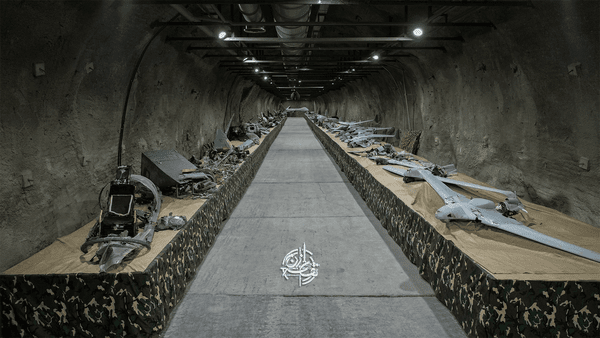
The extensive American and Israeli strikes during the conflict targeted parts of the Iranian air defense network, providing some degree of operational freedom for the enemy's fighter jets at certain stages. However, the continuation of confrontations proved that targeting several radars or systems does not necessarily mean the destruction of an entire air defense network. A significant part of Iran's defensive capabilities remained active, continuing its tasks relying on factors of movement, dispersion, stealth, repositioning, and changing operational formations. The network that reorganizes after being hit is no longer the same network whose information was recorded in the enemy's target bank. Mobile systems, after activating radars and detecting the target and engaging in combat, can change their location, and thus the image the enemy obtained of the Iranian defensive formation can lose its operational effectiveness in a short time. This becomes more significant when the enemy's drones, tasked with updating information, are shot down one after another. To attack a mobile system, the enemy needs updated information, and if it fails to locate its new position, the old coordinates may only lead to an empty area. The nature of Iranian defense in this field has also changed; it is no longer designed only to confront manned fighter jets and bombers; smaller, cheaper, longer-range drones equipped with reconnaissance and electronic warfare systems have become prominent targets for the air defense network.
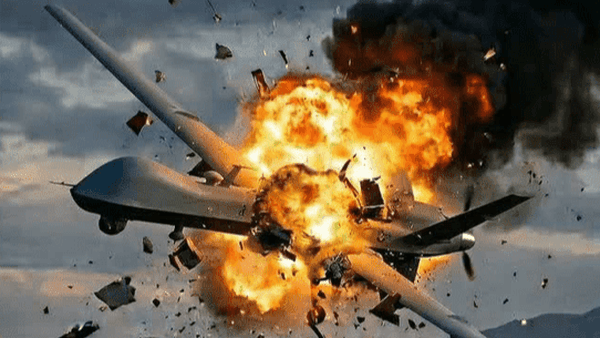
Modern defense systems demonstrate their superiority when they can see the enemy and engage with it, while simultaneously depriving it of the opportunity to detect and attack. The combination of distributed sensors, managing wave emissions, the movement of systems, short-range dispersion, and exploitation of the element of surprise is the same pattern that enhances the network's survival and maintains an unsafe sky for enemy aircraft. The hidden precursor to the attack on distant bases: how did the downing of drones pave the way for strikes on "Kharj" and "Al-Azraq"? The results of the recent defensive battle show that the attack on distant bases like "Kharj" and "Al-Azraq" would not have been possible without disrupting the enemy's reconnaissance capabilities. Targeting a distant objective requires not only a missile with an appropriate range but also depriving the enemy of information about preparation times, launcher locations, repositioning support units, possible launch trajectories, and the form of the operation. Reconnaissance drones were among the enemy's most critical tools for discovering these indicators. Their downing disrupted the continuity of surveillance, creating time gaps between information collection cycles, gaps that can be exploited to move launch platforms, prepare units, change formations, and execute operations. From this perspective, making the skies of Iran unsafe for reconnaissance drones was one of the important precursors for achieving the element of surprise in the attack on distant bases. Decreasing the enemy's intelligence control provided better protection for the preparation process for the attack and concealed part of the Iranian missile and drone movements.
After the Iranian strikes on nearby bases in Qatar, Kuwait, and Eastern Saudi Arabia, American leadership transferred part of its equipment and operational capabilities to farther points. Kharj, deep in Saudi Arabia, and Al-Azraq in Jordan were among the locations supposed to be protected by increasing the distance from Iranian attacks. The initial calculation assumed that the greater distance increased the warning time and allowed for defensive response opportunities, making Iranian reconnaissance and attack operations more difficult. However, Iranian operational units, after months of monitoring, analyzing information, and studying equipment transfer patterns, identified the new stabilization sites and added them to the target bank. As a result, the transfer of equipment did not only move it out of Iran’s reach but also caused part of the transferred capabilities to concentrate in new, specific locations. At the same time, diminished enemy capability for continuous monitoring of movements inside Iran reduced the likelihood of discovering preparations for the operation and provided a basis for surprise in areas that the Americans believed to be safer.
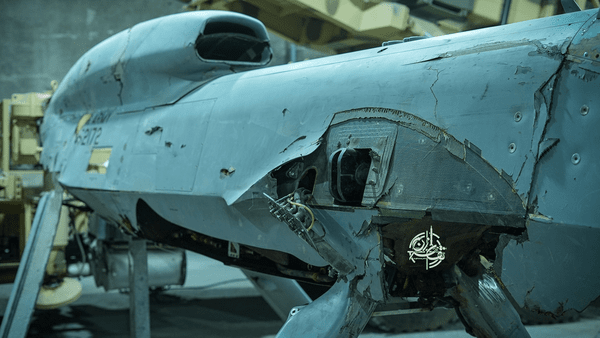
The success of the attacks on Kharj and Al-Azraq cannot be viewed solely as a result of downing a few drones. A successful long-range operation is the outcome of a combination of precise information, target identification, timing selection, deception, stealth, flight path design, missile and drone capability, breaching layers of defense, and assessing the results of the attack. Nevertheless, constraining the enemy’s intelligence vision stands as one of the fundamental pillars of this operational framework. The less the enemy sees, the less their reaction time diminishes, and the lower the likelihood of timely discovery and analysis of Iranian movements. In this model, defense is not limited to being a shield protecting the sky; through the destruction of the enemy's reconnaissance tools, defense also protects the missile and drone units and creates opportunities for conducting offensive operations. In other words, the hunting of drones and the attack on distant bases are not separate events but rather two parts of a single equation. Initially, the enemy targeted part of the Iranian defense network to pave the way for its reconnaissance and combat aircraft. However, the remaining capabilities of Iranian defense, by changing formation and focusing on hunting the "intelligence eyes," transformed the skies of the country from a safe environment for the enemy. Additionally, the enemy's reduced visibility allowed Iranian operational units to move in the time and location of their choosing.
The most important message of the strikes on Kharj and Al-Azraq was that moving equipment deep into the area no longer guaranteed its safety. The United States, by distancing its military assets, attempted to contain the Iranian threat behind a geographical distance. However, Iran, by combining range, precision, information, and surprise, demonstrated its ability to locate and target the transferred equipment in its new positions. In this context, the air defense of the aerospace forces of the Revolutionary Guard played a role that goes beyond point defense. By maintaining part of the air defense network, intercepting advanced reconnaissance drones, and creating intelligence blind spots, this force limited the enemy's operational freedom, shifting part of the initiative to Iranian missile and drone units. The geographical depth is no longer a protective shield, and distant bases are no longer safe havens. Iran has proven that the American security equation in the region has changed, and that distance is no longer a guarantee of safety but just an additional factor in assessing risks.
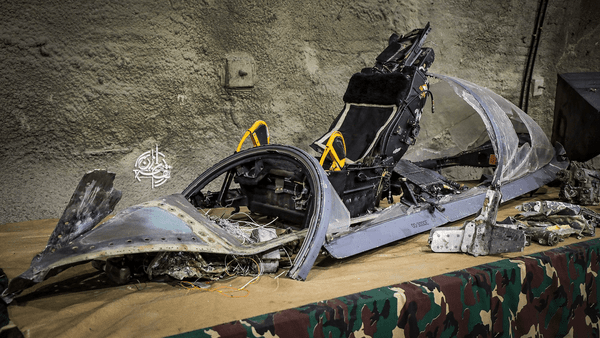
The downing of "Heron" and "Hermes": Every downed eye blinded to Iran does not merely represent wreckage of "Heron" and "Hermes" or other hostile aircraft but serves as evidence of the successful destruction of a number of defensive shots. Each wreckage is an "eye extinguished," unable to detect the locations of launch pads, monitor Iranian movements, or provide the enemy with the necessary information for the next attack. From the downing of spy planes in the skies of Iran to the missiles striking their targets at "Kharj" and "Al-Azraq," a single operational logic emerges: first, the enemy's eye was constrained; then its ability to detect and analyze Iranian movements diminished; and finally, the strike landed in geography presumed to be out of reach. This is the strategic link between defense and attack; defense does not merely fight to repel the assault but blinds the enemy's eye so that the Iranian sword may strike from an unexpected direction. #IranMissiles #AlAzraqBase #KharjBase #America #Jordan #SaudiArabia