The Iraqi visual artist Taha Sabaa confirmed that the Moroccan city of Marrakech has become an essential part of his artistic experience and personal memory, indicating that his exhibition held at Dar Al-Sharifa in the old city evokes the interplay of popular heritage and imagination with the human experiences he has lived during his years in Morocco.
Sabaa stated in an interview followed by the News Video Agency that his relationship with Marrakech began in his childhood when he saw a picture of it in a school atlas, which remained etched in his memory until he had the opportunity to work in Morocco as a teacher, without expecting that the city would later become a fundamental space in his life and artistic creativity.
He added that his first arrival in Marrakech was at night, before waking up in the morning to the sound of drums in Jemaa el-Fnaa square, in a scene that reminded him of the atmosphere of Baghdad, childhood stories, and the world of "One Thousand and One Nights," noting that the city has given him a new memory that has crystallized over the years and reflected in his artistic works.
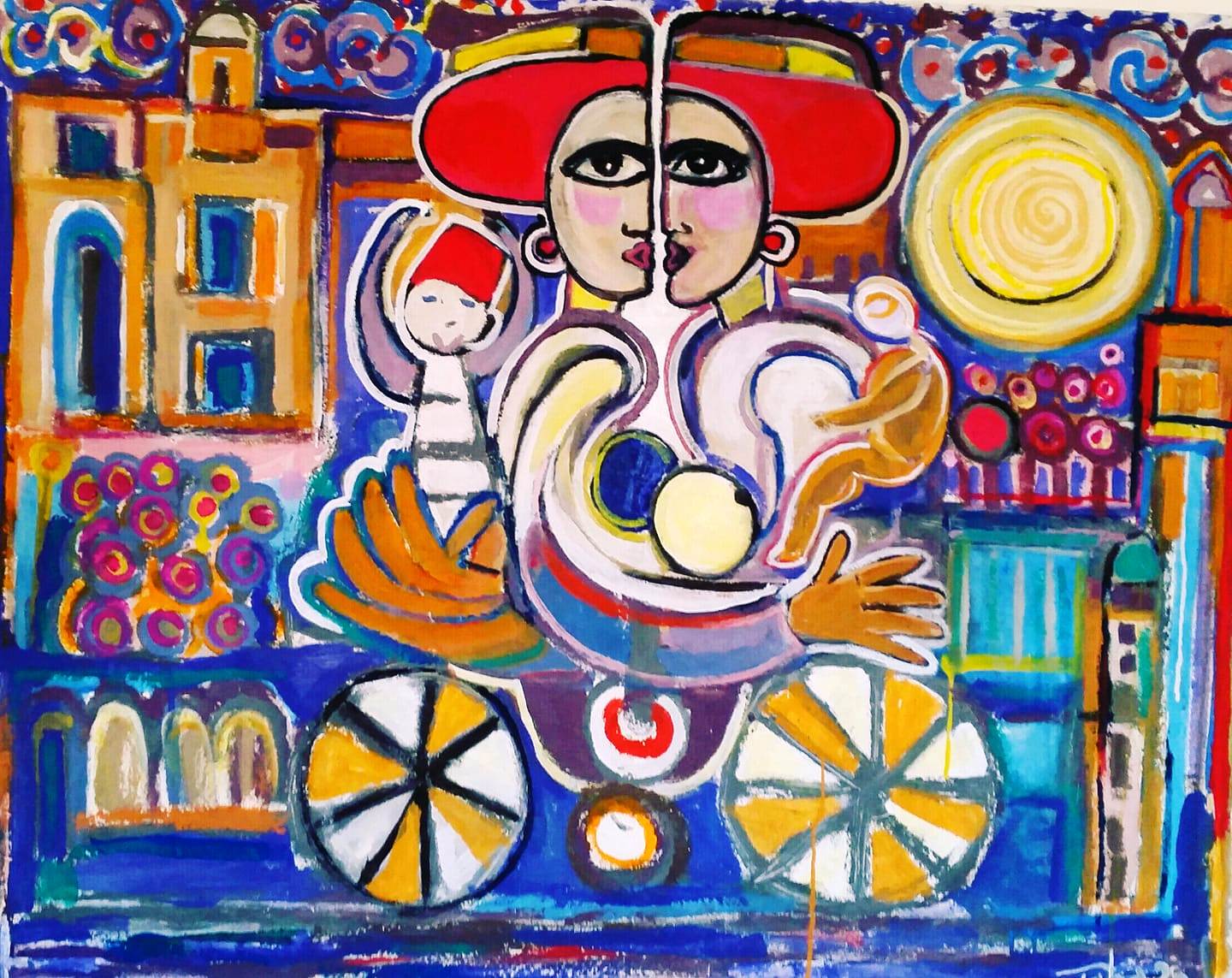
He explained that his current exhibition at Dar Al-Sharifa includes works inspired by memory, imagination, and popular heritage, led by a large painting titled "One Thousand and One Nights," which features characters and elements drawn from stories, myths, and personal experiences.
He indicated that the idea for the painting evolved from a title that evokes "Al-Harafish" by novelist Naguib Mahfouz to the world of "One Thousand and One Nights," before he decided to add another night representing his personal experience with Marrakech, explaining that the work embodies the extension of traditional stories through what humans add to them from their memory and experiences.
Sabaa pointed out that the choice of Dar Al-Sharifa to host the exhibition aligns with the historical nature of the place and the displayed works, as the architecture, lighting, and surrounding colors contribute to shaping the viewing experience, opening the relationship between the artwork and its space to multiple interpretations, bringing art closer to daily life and the audience.
In the context of discussing his human experience, the Iraqi artist emphasized that his work in education, especially with children with special needs, has been one of the most impactful phases in his journey, noting that the simple questions of children pushed him to rethink concepts of life, freedom, and dreams.
Sabaa recalled the story of the painting "The Dream of the Fish," which was inspired by a question from a child about the dreams of fish living inside glass tanks, explaining that the question turned into an artistic contemplation on the limits of life and the desire to transcend constraints toward broader spaces.
He said that a person, like a fish trapped in a tank, may live within boundaries that restrict their movement, but continues to dream of a wider world, adding that art represents an attempt to transcend these limits and open windows to new possibilities, and that everyday details and simple human situations can transform into artistic ideas with deeper meanings.
About his beginnings in showcasing his works, he explained that he spent years painting away from the public before someone interested in his work encouraged him to hold his first solo exhibition at the French cultural center in Marrakech, an experience that helped him overcome his hesitation and opened up avenues for dialogue with the audience.
He affirmed that criticism and audience opinions are an important part of the artistic experience, but they should not become a singular criterion that restricts the artist's freedom, noting that the audience may discover meanings in the painting that had not occurred to its creator, which gives the artwork multiple dimensions and interpretations.
In concluding his talk, Sabaa touched on the recurring symbols in his works, indicating that the red heart and the dove are associated with meanings of love, peace, and freedom, reflecting his influence from the human experiences he has lived, especially his work with children, emphasizing that the phrase "with love alone we live" encapsulates his vision of life and his belief in the role of love in building human relationships.